
When Should You Replace Your Mattress? Honest Signs It's Time
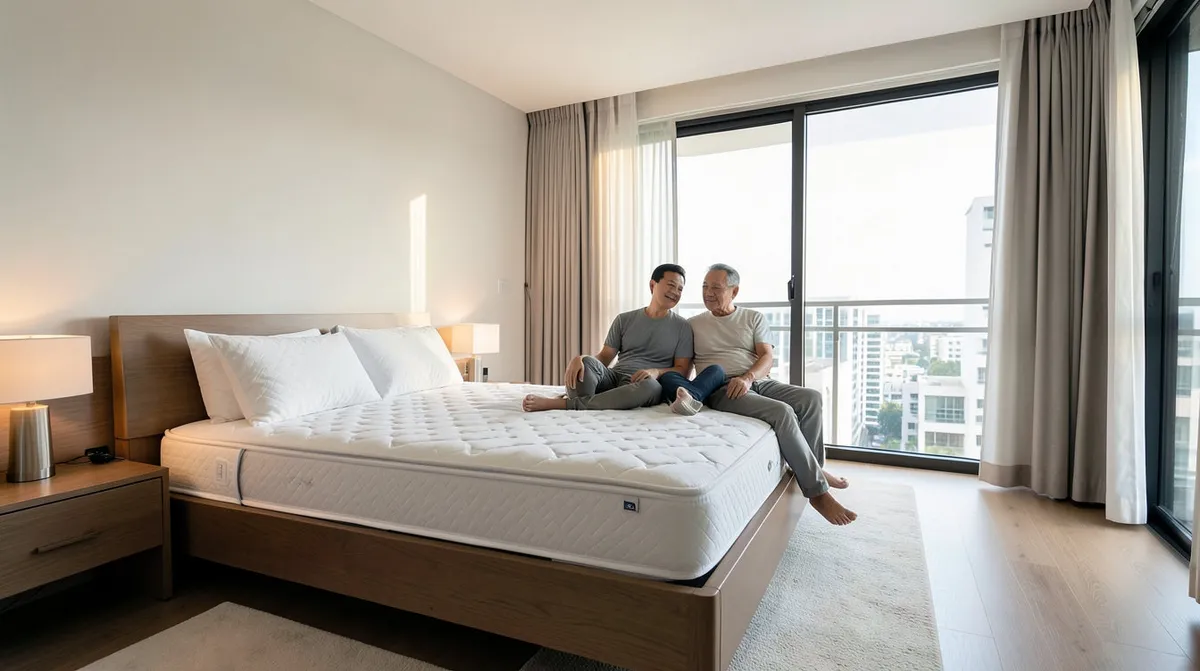
The Mattress Question Everyone Puts Off
Most people replace a sofa or a wardrobe long before they think about replacing a mattress, mostly because a mattress doesn't show its age the way visible furniture does. But an old, worn mattress affects your sleep every single night, and in Singapore's humidity, mattresses often age faster than people expect. Here are the honest signs that it's time to let yours go.
Sign 1: You Can See or Feel a Body Impression
Run your hand across the surface of your mattress, or better yet, look at it from the side with the sheets off. A visible dip or valley where you or your partner usually sleep means the internal support material has broken down in that spot. Once this happens, the mattress can no longer distribute your weight evenly, and the dip tends to get worse rather than resolve on its own.
Sign 2: You Wake Up With Aches That Ease as the Day Goes On
If your back, hips, or shoulders feel stiff or sore specifically in the morning, and that discomfort gradually fades once you're up and moving, your mattress is a likely cause. A mattress that has lost its support forces your spine out of a neutral position overnight, and this pattern of morning-specific pain is one of the clearest signals worth paying attention to.
Sign 3: You Feel Every Movement Your Partner Makes
Worn-out springs or degraded foam transmit motion across the surface far more than a mattress in good condition. If you're waking up each time your partner shifts position, the internal materials have likely lost the density needed to isolate movement.
Sign 4: It's Creaking, Sagging, or Visibly Uneven
For spring mattresses, audible creaking or a lumpy, uneven feel usually means coils have weakened or shifted. For foam mattresses, a permanent softening in high-pressure areas, hips and shoulders in particular, signals that the foam has broken down beyond what a mattress topper can meaningfully fix.
Sign 5: It Smells Musty Even After Airing Out
Singapore's humidity means mattresses can absorb moisture over years of nightly use, even with a protector. A persistent musty smell that doesn't go away after airing the mattress in a well-ventilated room, or visible dark spotting, usually points to mould or mildew that has worked its way into the internal layers. At that point, replacement is the safer option rather than trying to clean it out.
Sign 6: It Has Simply Reached Its Age
Most mattresses have a reasonable working life of around seven to ten years with regular use, though this varies with the materials used and how well it's been cared for. Rotation, use of a protector, and room ventilation all affect how long it lasts. If your mattress is approaching or past this range and any of the signs above are also present, it's worth taking seriously rather than waiting for a single dramatic failure.
What to Do Once You Notice These Signs
- Check for visible sagging or unevenness with the sheets removed.
- Pay attention to whether aches are specifically worse in the morning.
- Air your mattress periodically and check for musty smells or dark spotting.
- Use a breathable mattress protector to slow moisture absorption in humid weather.
At Nova Furnishing, our team can talk you through firmness levels and support layers suited to how you actually sleep, rather than guessing from a showroom test lie-down alone.
Test Before You Decide
A mattress is one purchase worth trying properly rather than choosing from a photo. Visit a Nova Furnishing showroom to lie down and compare support levels in person, or message us on WhatsApp with questions about what might suit your sleep needs.
Related Articles
How to Maintain Your Mattress for Maximum Lifespan in Singapore
Simple mattress habits that make a real difference in Singapore's climate: rotating, airing out, using the right protector, and knowing when it's time for a new one.
27 March 2026
Natural Latex vs Synthetic Latex Mattress: Is the Premium Justified?
Natural and synthetic latex get lumped together as one product, but they sleep very differently once Singapore's heat and humidity get involved. Here's what actually separates the two.
25 March 2026
Pocket Spring vs Memory Foam Mattress: Which Sleeps Better in Singapore?
Pocket spring versus memory foam in Singapore's climate: how they compare on support, motion isolation, heat, and humidity.
23 March 2026
What to Test When Shopping for a Mattress: A Showroom Checklist
A hands-on showroom checklist for testing mattress firmness, support and heat retention before buying in Singapore's climate.
19 March 2026