
What to Test When Shopping for a Mattress: A Showroom Checklist
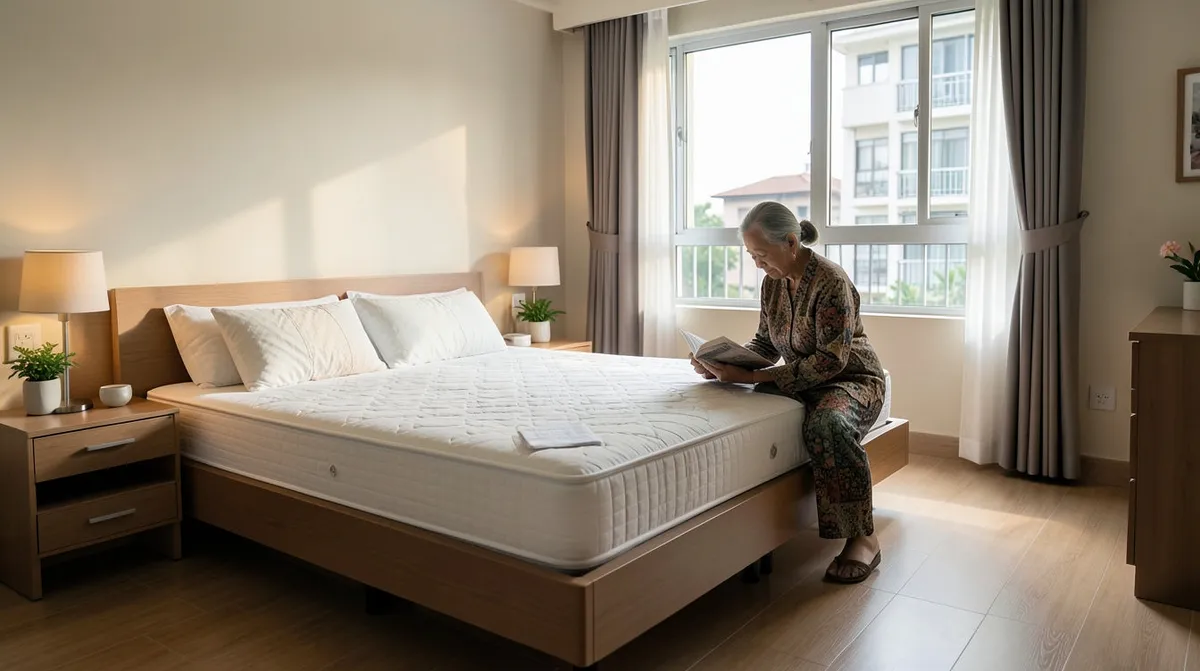
Do Not Judge a Mattress in Thirty Seconds
Most people spend less than a minute lying on a mattress in a showroom before moving on, yet a real trial needs closer to ten to fifteen minutes to reveal how a mattress actually behaves under your body weight and sleeping position. Treat a mattress test the way you would treat a test drive: give it enough time to show its true character, not just its first impression.
Test in Your Actual Sleeping Position
Do not just lie on your back if you sleep on your side at home. Side sleepers need enough give at the shoulder and hip to avoid pressure points, while back and stomach sleepers generally need firmer support to keep the spine aligned. Lie in your normal position for several minutes and pay attention to whether any point of your body feels like it is sinking too far or being pushed up too hard.
Check Firmness Against Your Actual Weight
Firmness is not one-size-fits-all; the same mattress can feel noticeably different to a lighter person and a heavier person. If you and a partner have a significant weight difference, both of you should test the same mattress individually and discuss how it feels, since a compromise that satisfies neither party is a common and avoidable mistake.
Test Edge Support
Sit near the edge of the mattress, and if it is comfortable to do so, lie close to the edge as well. Weak edge support means the usable sleeping surface shrinks over time as you unconsciously avoid the edges, which matters more in shared beds and in smaller bedrooms where the mattress may sit close to a wall on one side.
Test Motion Isolation if You Share a Bed
If you sleep with a partner, have them get in and out of bed, or shift position, while you lie still on the other side. Good motion isolation means you barely notice their movement; poor isolation means every turn disturbs your sleep. This single test can be more informative than reading any spec sheet about the internal construction.
Consider Heat Retention for Singapore's Climate
Singapore's warm, humid nights make heat retention a real consideration that buyers in cooler climates may not need to weigh as heavily. Dense memory foam can trap body heat, while pocket-sprung mattresses and open-cell or gel-infused foams tend to allow more airflow. If you tend to sleep hot, or your bedroom is not air-conditioned through the night, ask specifically about breathability rather than assuming all foam mattresses behave the same way.
Ask About the Trial and Warranty Terms
A mattress that feels fine for fifteen minutes in a showroom can feel different after a full week of actual sleep. Ask what trial period is offered, what the exchange process involves if the firmness turns out to be wrong, and what the warranty covers, since sagging beyond a certain depth is a common warranty term worth understanding before you buy, not after.
Match the Mattress to Your Bed Base
A mattress performs differently depending on what it sits on. Confirm whether your chosen mattress is designed for a slatted base, a solid platform base, or an adjustable base, since a mismatch can affect both comfort and the mattress's expected lifespan. If you are replacing a mattress but keeping an existing bed frame, bring the base type into the conversation before deciding.
Bring Enough Time to Your Showroom Visit
A rushed mattress decision is one of the easiest home purchases to get wrong, simply because the testing takes patience that many buyers do not budget for. Set aside enough time on your visit to properly lie down, in your own position, for several models, rather than making a snap decision based on how a mattress looks. Visit a Nova Furnishing showroom and take the time you need, or message us on WhatsApp beforehand so our team can have suitable options ready for you to test.
Related Articles
How to Maintain Your Mattress for Maximum Lifespan in Singapore
Simple mattress habits that make a real difference in Singapore's climate: rotating, airing out, using the right protector, and knowing when it's time for a new one.
27 March 2026 · 3 min read
Natural Latex vs Synthetic Latex Mattress: Is the Premium Justified?
Natural and synthetic latex get lumped together as one product, but they sleep very differently once Singapore's heat and humidity get involved. Here's what actually separates the two.
25 March 2026 · 4 min read
When Should You Replace Your Mattress? Honest Signs It's Time
The honest signs a mattress needs replacing, from morning aches to a musty smell in Singapore's humidity, and what to check before you decide.
25 March 2026 · 3 min read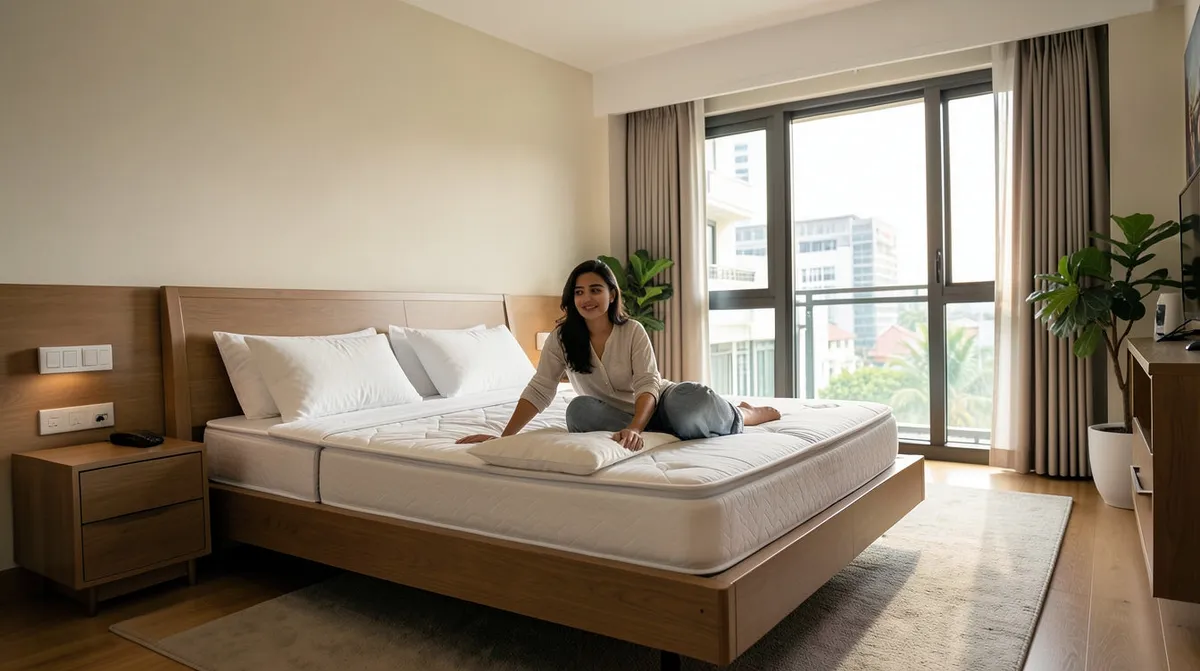
Pocket Spring vs Memory Foam Mattress: Which Sleeps Better in Singapore?
Pocket spring versus memory foam in Singapore's climate: how they compare on support, motion isolation, heat, and humidity.
23 March 2026 · 4 min read