
How to Maintain Your Mattress for Maximum Lifespan in Singapore
Rotate, Do Not Always Flip
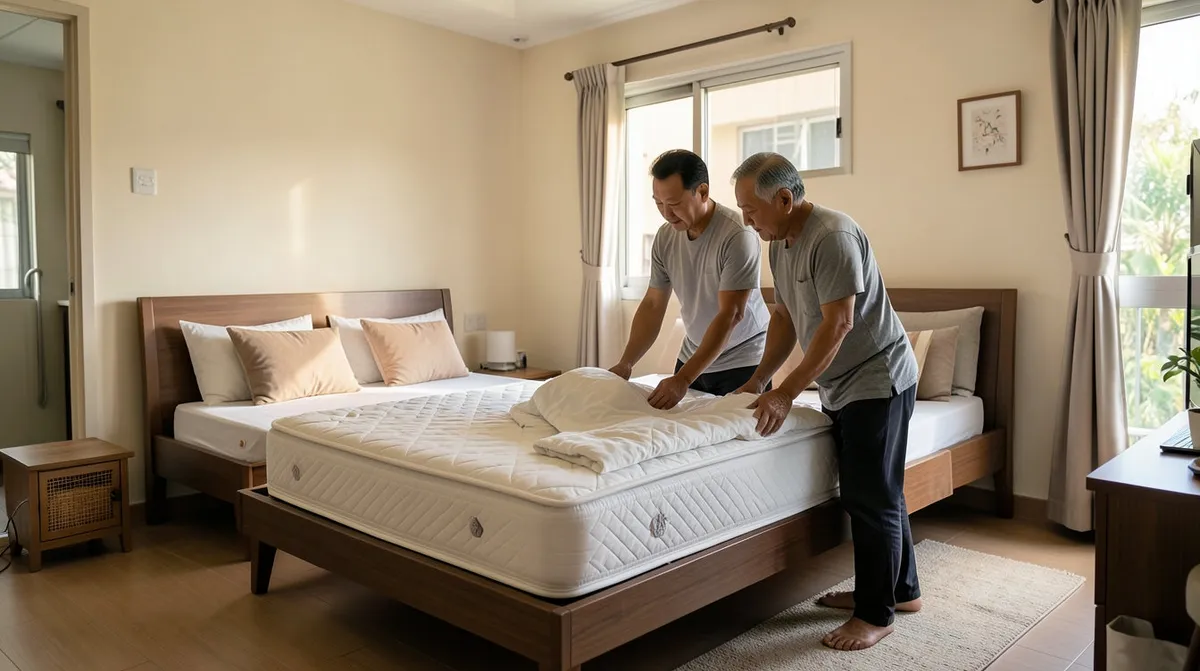
Most modern mattresses have one designated sleeping side and aren't meant to be flipped the way older two-sided ones were. Check the care label first. If yours is single-sided, rotate it head-to-foot every two or three months instead. This spreads out the wear from how you normally sleep and helps stop a body-shaped dip from forming in one spot.
Use a Protector Suited to Singapore's Humidity
A mattress protector isn't just for spills. In our climate, it's really a barrier against the moisture and sweat that build up faster here than in cooler places, and which can otherwise work into the foam or fabric and set the stage for mould or dust mites. Where you can, go for a breathable, moisture-wicking protector rather than a fully waterproof, plastic-backed one, since the sealed kind can trap heat and damp against the mattress instead of letting it escape.
Air It Out Regularly
Every so often, strip the bedding and let the mattress sit uncovered for a few hours with the window open or a fan running, ideally during the drier part of the day. This small habit lets out the moisture that builds up overnight from body heat, and it matters even more in rooms without the aircon running all day.
Vacuum to Manage Dust Mites
Dust mites do well in Singapore's warm, humid air, and they build up in a mattress steadily no matter how clean your sheets look. Running an upholstery attachment over the mattress surface every few months helps clear out the dust, skin cells and mite debris that washing your sheets alone won't reach.
Keep It Away From Direct Sunlight and Damp Walls
Hours of direct sun can wear down certain foam and fabric over time, so try to keep the bed out of the path of harsh afternoon light, especially in west-facing rooms. It's also worth avoiding pushing the bed right up against an exterior wall that feels damp or cold to the touch, since that moisture can work its way into the mattress edge over time.
Support It Properly
Even a good mattress only lasts as long as what's holding it up. Slats spaced too far apart, a base that's started to sag, or a frame that no longer sits level all speed up uneven wear underneath you. Check every so often that your bed frame is still solid, particularly if it's been in use for years. Fixing or replacing a tired base is usually far simpler than replacing a mattress that failed early because of it.
Manage Odour Before It Sets In
A faint musty smell is usually the first sign of trapped moisture, often well before any mould is visible. Sprinkling baking soda over the mattress and vacuuming it up after a few hours can lift light odours between deeper cleans. If the smell keeps coming back after airing, a fresh protector and vacuuming, it usually means moisture has settled deeper than surface care can reach, and that's worth dealing with properly rather than covering up with air freshener, since the dampness underneath will just keep affecting the material.
Know the Signs It Is Time to Replace
Watch out for visible sagging or a body-shaped dip that doesn't bounce back, support that feels noticeably weaker than when it was new, waking up with aches you didn't have before, or a musty smell that cleaning won't shift. Any one of these usually means the mattress has reached the end of its useful life, whatever its age on paper.
Get Personalised Care Advice
Pocket spring, memory foam, latex or hybrid mattresses all respond a little differently to our climate, so the right care routine depends on what you actually own. If you're unsure what your current mattress needs, or you're choosing a new one and want to know how to look after it properly from day one, drop by a Nova Furnishing showroom or message our team on WhatsApp. We're happy to advise based on your specific mattress and bedroom setup.
Related Articles

Natural Latex vs Synthetic Latex Mattress: Is the Premium Justified?
Natural and synthetic latex get lumped together as one product, but they sleep very differently once Singapore's heat and humidity get involved. Here's what actually separates the two.
25 March 2026
When Should You Replace Your Mattress? Honest Signs It's Time
The honest signs a mattress needs replacing, from morning aches to a musty smell in Singapore's humidity, and what to check before you decide.
25 March 2026
Pocket Spring vs Memory Foam Mattress: Which Sleeps Better in Singapore?
Pocket spring versus memory foam in Singapore's climate: how they compare on support, motion isolation, heat, and humidity.
23 March 2026
What to Test When Shopping for a Mattress: A Showroom Checklist
A hands-on showroom checklist for testing mattress firmness, support and heat retention before buying in Singapore's climate.
19 March 2026