
Ageing Parents Moving In Over the Year-End Holidays? Choosing a Sofa and Bed That Actually Support Them

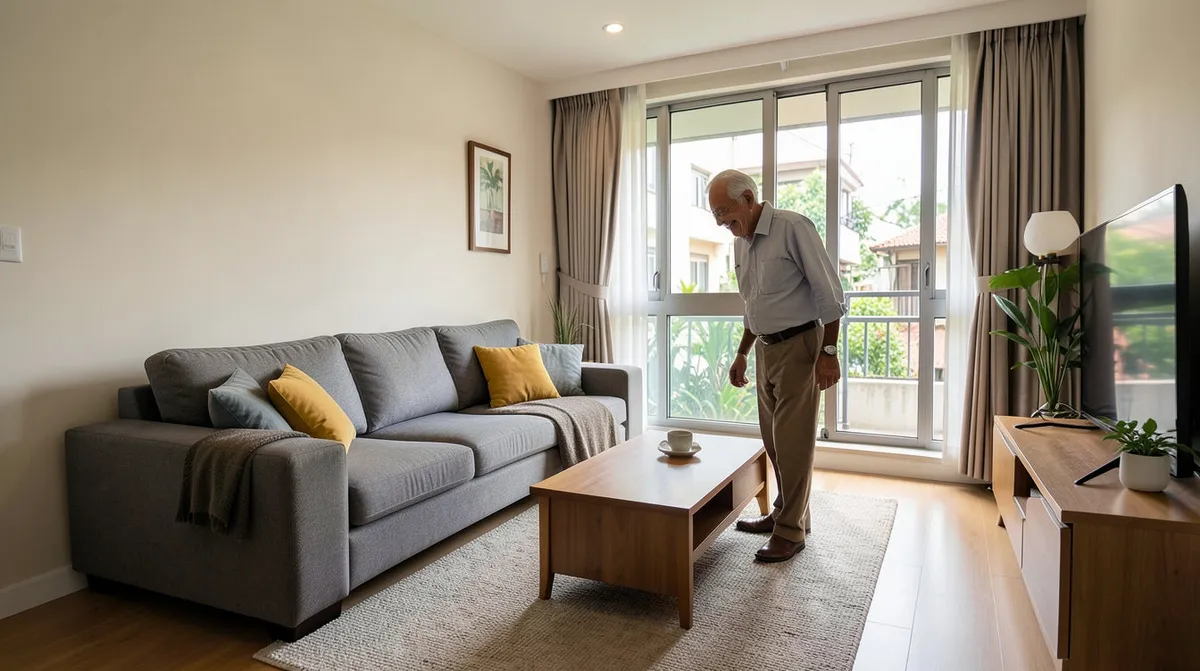
A lot of families rearrange the house in December and over the New Year, because that is when everyone is off and the awkward conversations finally happen. One of the most common is a parent moving in from a flat they can no longer manage alone. The furniture that made the living room feel relaxed for two adults in their thirties is often the wrong furniture for somebody in their seventies.
The problem: low, soft and deep is the worst combination
The sofa most couples choose is low to the floor, soft in the seat and deep front to back. All three of those work against an older body.
Seat height is the big one. A seat that sits around 38 to 40cm off the floor means sinking well below knee level, and standing up then needs a push from the arms and a fair amount of thigh strength. A seat closer to 45 to 48cm lets most people rise without needing a run up.
Seat depth is next. A deep sofa of 60cm or more means either sitting forward with no back support or sitting right back with feet dangling off the floor. Neither is comfortable for an hour of television.
Then there is the arm. A low, soft or rolled arm gives nothing to push against. A firm arm at a usable height is genuinely the difference between getting up independently and asking for a hand.
Why it happens
Showroom sitting is short. You sit for thirty seconds, the sofa feels plush, and plush reads as comfortable. What you cannot feel in thirty seconds is how hard it is to get out of after an hour, which is the measurement that matters to an older parent.
The second reason is that the bed usually gets sorted last. A spare room gets a mattress that was already there, often a soft one, and a low platform frame that looked neat. Low frames make sitting on the edge of the bed to put on shoes harder than it should be, and a mattress that is too soft makes rolling over and sitting up harder still.
What to do about it
Measure the seat, not the sofa
Take three numbers on every sofa you try: seat height from the floor to the top of the cushion with weight on it, seat depth from the front edge to the backrest, and arm height from the floor. Write them next to your parent's own preference for comfort. Our sofa guide explains how these measurements relate to each other, and the sofas collection lets you filter down to recliners and firmer builds.
Look seriously at a recliner
A recliner earns its place here for a reason people often miss. It is not only the reclining. Recliner frames tend to sit higher, the arms are firm and wide because the mechanism lives inside them, and the footrest means the legs get supported without the seat having to be deep. The Helsinki Half Leather Recliner Sofa is a good example of that build, and half leather wipes down easily, which matters if medication or drinks get spilled.
Get the bed height right before you get the mattress right
Aim for a combined frame and mattress height where your parent's feet rest flat on the floor with knees at roughly a right angle when sitting on the edge. That usually lands somewhere between 50 and 60cm total, depending on height. Choose the frame and the mattress thickness together, because a thick mattress on a tall frame quickly becomes a climb.
Fix the route, not just the furniture
Leave 90cm of clear walking width around the sofa and along the path to the bathroom. Take the rug out if the edge curls. If your parent uses a walking stick, check there is somewhere to stand it that is within reach of the seat. We also wrote a fuller piece on this in buying furniture for your parents' home.
Before you decide
- Bring your parent to the showroom and let them sit for longer than a minute, then stand up unaided.
- Measure seat height, seat depth and arm height on every option.
- Check they can stand without pushing off your hand, which is the only test that really counts.
- Match bed height so feet rest flat on the floor when sitting on the edge.
- Keep 90cm of clear floor on the main walking routes.
- Choose a cover material you can wipe rather than one that needs specialist cleaning.
Questions people ask
Is a firmer sofa always better for an older person?
Firmer usually helps with getting up, but too firm becomes uncomfortable to sit in. Aim for supportive rather than hard, and let your parent be the judge.
Should the recliner be manual or powered?
Powered is easier if hand strength or shoulder movement is limited, since a manual lever needs a decent pull. Manual is simpler and has nothing to plug in.
Can we just add a cushion to raise the seat?
It helps a little in the short term, but a loose cushion moves when someone pushes off it, which is not ideal. Getting the seat height right in the first place is safer.
If a parent is moving in over the holidays, send us a WhatsApp message and tell us a bit about what they find difficult, and we will point you at the models worth trying. Better still, bring them along to Boon Lay, Ang Mo Kio, Sims Drive or Changi and let them sit down properly.
Related Articles
Behind the Scenes: How a Quality Sofa Is Actually Made
What actually determines sofa quality: frame timber, suspension type, foam density, and stitching, explained plainly.
13 April 2026 · 4 min read
We Measured 50 HDB Living Rooms, Here's the Sofa Size That Fits Almost Every One
The sofa size and configuration that fits most HDB living rooms, plus clearance rules and honest material trade-offs for Singapore's humid climate.
13 April 2026 · 3 min read
What Your Sofa Colour Says About You
A practical look at sofa colour choices, paired with honest guidance on measuring, materials, and finding the right configuration for your home.
13 April 2026 · 2 min read
Customise Your Dream Sofa at Nova Furnishing: Materials, Colours and Sizes
How sofa customisation actually works at Nova Furnishing: choosing between fabric or leather, picking a colour that suits your light, and sizing a configuration to fit your floor plan.
11 April 2026 · 4 min read