
Solid Wood vs Engineered Wood Dining Tables: What You're Really Paying For Before Your Reunion Dinner Hosting

Around the turn of the year the dining table questions start. A family who hosts fourteen people for the Chinese New Year reunion dinner, usually across two sittings, comes in wanting something that will survive the night without a scratch and still look right in March. Then somebody asks whether solid wood is worth it, and the conversation stops being about hosting and starts being about construction.
The problem: two tables that look identical under showroom lights
Put a solid oak top next to a good engineered oak top and most people cannot tell them apart at arm's length. Both have grain. Both feel like wood. The difference sits in what is underneath the first two millimetres, and that is the part that decides how the table behaves in a Singapore flat five years from now.
A solid top is one material all the way through, cut into staves and glued edge to edge. It moves with the weather. An engineered top is a stable core, usually plywood or a dense board, with a real wood veneer bonded on top. It moves far less, because the core layers are laid across each other and hold one another still.
Neither one is the better table in the abstract. They fail differently, and that is the useful thing to know before fourteen people sit down around it.
Why it happens
Our climate is the reason this matters more here than it does in a temperate country. Indoor humidity in an HDB flat swings between roughly 60 and 90 percent depending on whether the air conditioning is running, the windows are open, or the monsoon has arrived. Wood takes on moisture and gives it back, and as it does, it swells and shrinks across the grain.
Solid tops handle that by moving. If the maker allowed for it, the movement is invisible. If they did not, you get a hairline gap along a glue joint, or a top that cups slightly at the ends. Engineered tops handle it by not moving much at all, which is why they stay flat, but the trade is that a deep gouge goes through the veneer and cannot be sanded back the way a solid top can.
There is also a simpler reason this catches people. Nobody thinks about the table until they are already hosting on it.
What to do about it
Match the construction to how the table will actually be used
If your dining table doubles as a homework desk, a craft table and a laptop station, a stable engineered top with a hard wearing finish tends to be the calmer choice. If you want a piece you will refinish in fifteen years and hand on, solid wood earns its place. Our dining table guide walks through the other materials we carry, including sintered stone, which behaves differently again.
Look at the edge, the underside and the leg joint
Turn the table over, or ask us to. On an engineered top you should see a clean, evenly layered core and a veneer that wraps the edge rather than stopping short of it. On a solid top, look at the end grain: the staves should be roughly even in width and the grain direction alternated. Then push down hard on one corner. A table that racks in the showroom will rack at the reunion dinner with a full spread on it.
Decide the finish before you decide the species
Finish does more day to day work than the wood underneath it. A closed pore lacquer or a scratch resistant surface shrugs off spilled curry and hot serving dishes in a way an open oiled finish will not. The Genoa Walnut Scratch-Resistant Dining Table is the one I usually point reunion dinner hosts at, because it takes a wipe down without leaving a watermark ghost. If you want to compare a few side by side, the full dining set collection is the easiest place to start.
For a deeper look at how the two materials are made, we wrote it up separately in the difference between solid wood and engineered wood furniture.
Before you decide
- Count the largest number of people you realistically seat, then add two.
- Check whether the table sits under a window that gets direct afternoon sun.
- Ask whether the top is solid through, veneered, or laminated, and get the answer in plain words.
- Press down on a corner and a mid span of the top to test for flex.
- Ask what happens to a deep scratch on that specific finish, because the answer differs by construction.
- Confirm the table will clear your lift and your doorway before you fall in love with it.
Questions people ask
Will a solid wood table crack in Singapore?
A well made one should not. Cracking usually comes from a top that was not allowed to move, or from sitting a table right under an air conditioner that dries one side faster than the other.
Is engineered wood the same as particle board?
No. Particle board is compressed chips. Engineered tops used for dining tables are layered boards or plywood cores with a real wood veneer, and they are considerably stronger.
Can I put hot dishes straight on either one?
Use a trivet on both. Heat marks on a veneered top are permanent, and on a solid oiled top they usually mean refinishing that section.
If you are hosting the reunion dinner and want to narrow it down properly, send us a WhatsApp message with your dining area measurements and how many people you seat. Or come and lean on a few tables at Boon Lay, Ang Mo Kio, Sims Drive or Changi, which tells you more in ten minutes than any photo will.
Related Articles
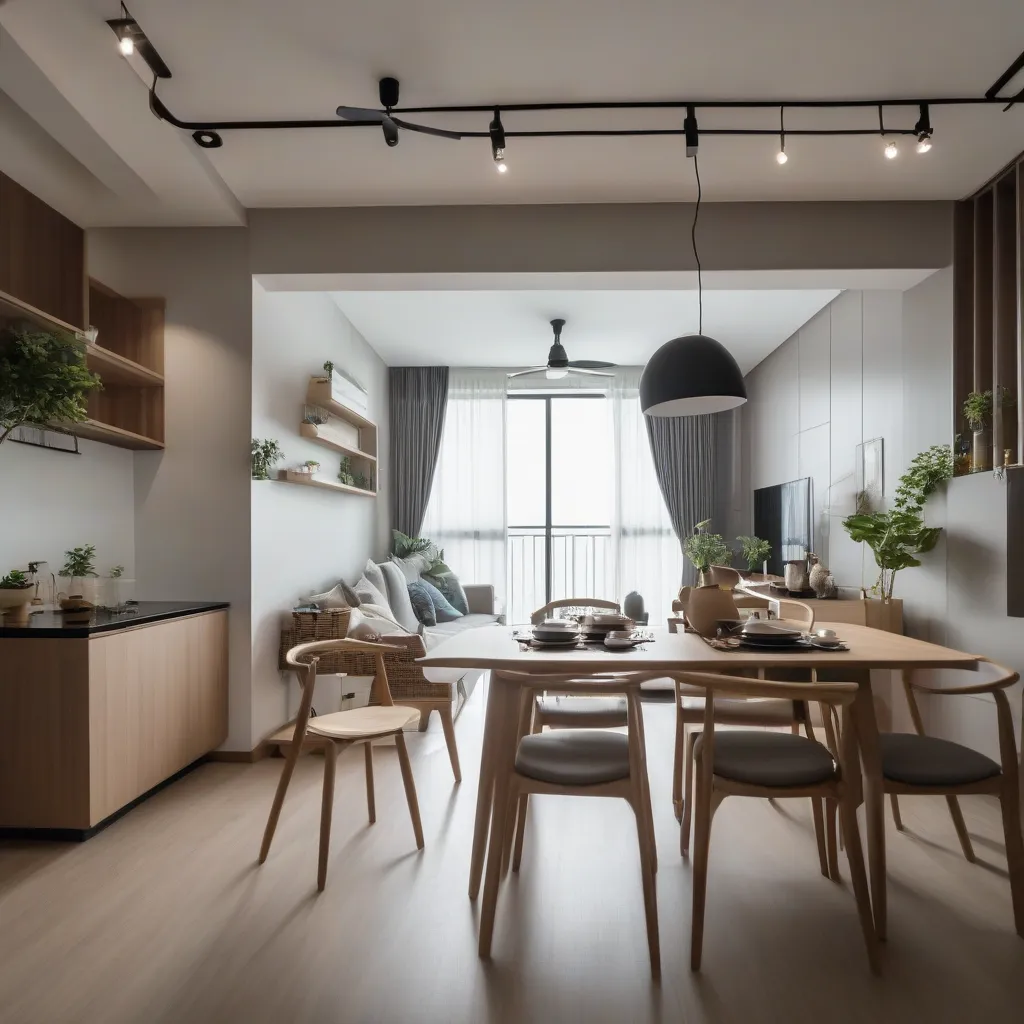
The Nova Furnishing Dining Collection: Tables for Every Singapore Home
A walk through the shapes, sizes, and materials in the Nova Furnishing dining collection, and how to match a table to the way your home is actually laid out.
11 April 2026 · 3 min read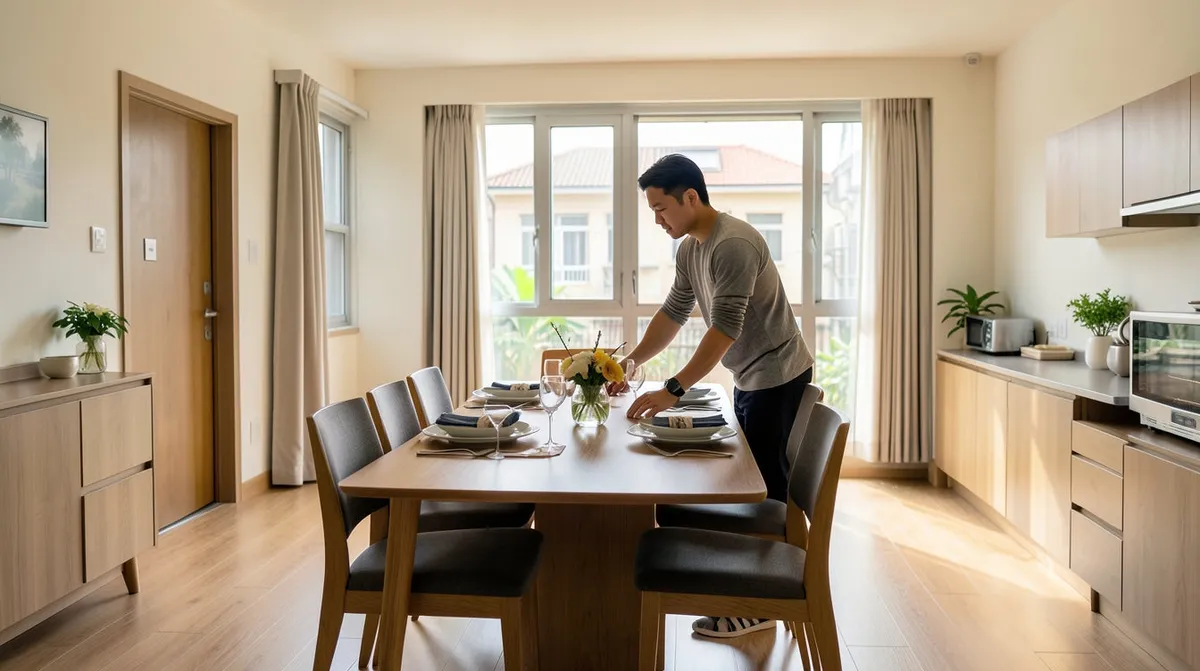
Hosting Raya, CNY and Deepavali: Furniture That Makes Festive Gatherings Better
Once a year your dining table has to work twice as hard. Extendable tables, flexible seating and a good sideboard make hosting Raya, CNY and Deepavali much less stressful.
10 April 2026 · 4 min read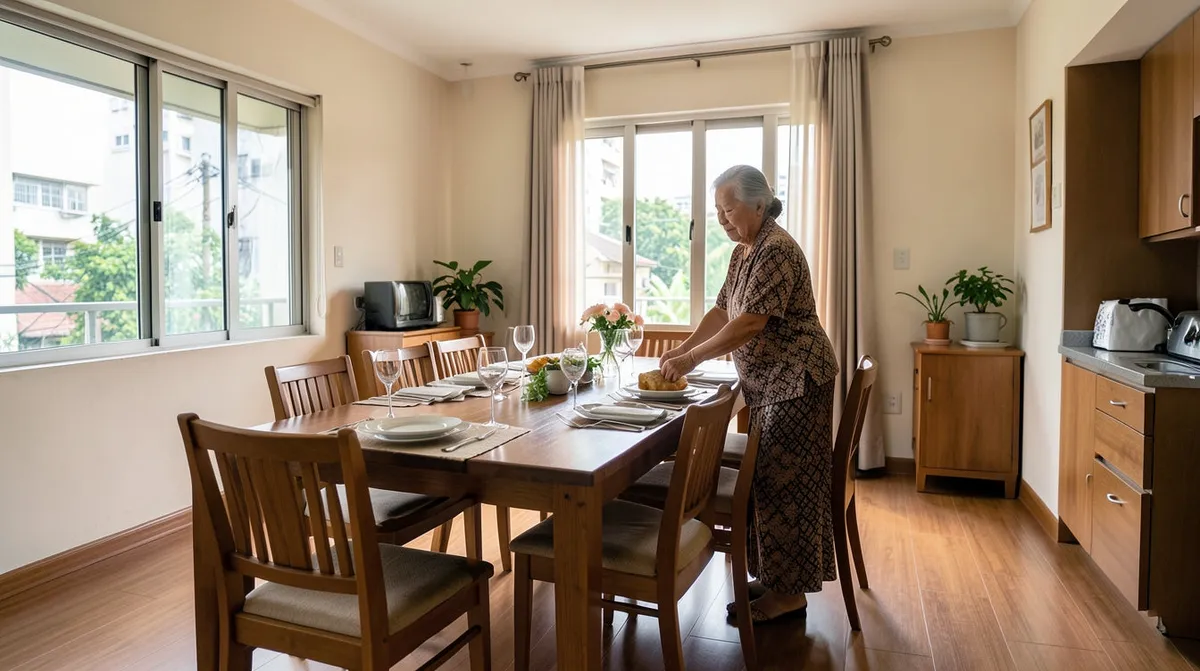
The Underrated Pleasure of a Really Comfortable Dining Area
Real dining comfort comes from chair cushioning, warm lighting, and a bit of breathing room, not just table dimensions. Here's how to get it right at home.
9 April 2026 · 3 min read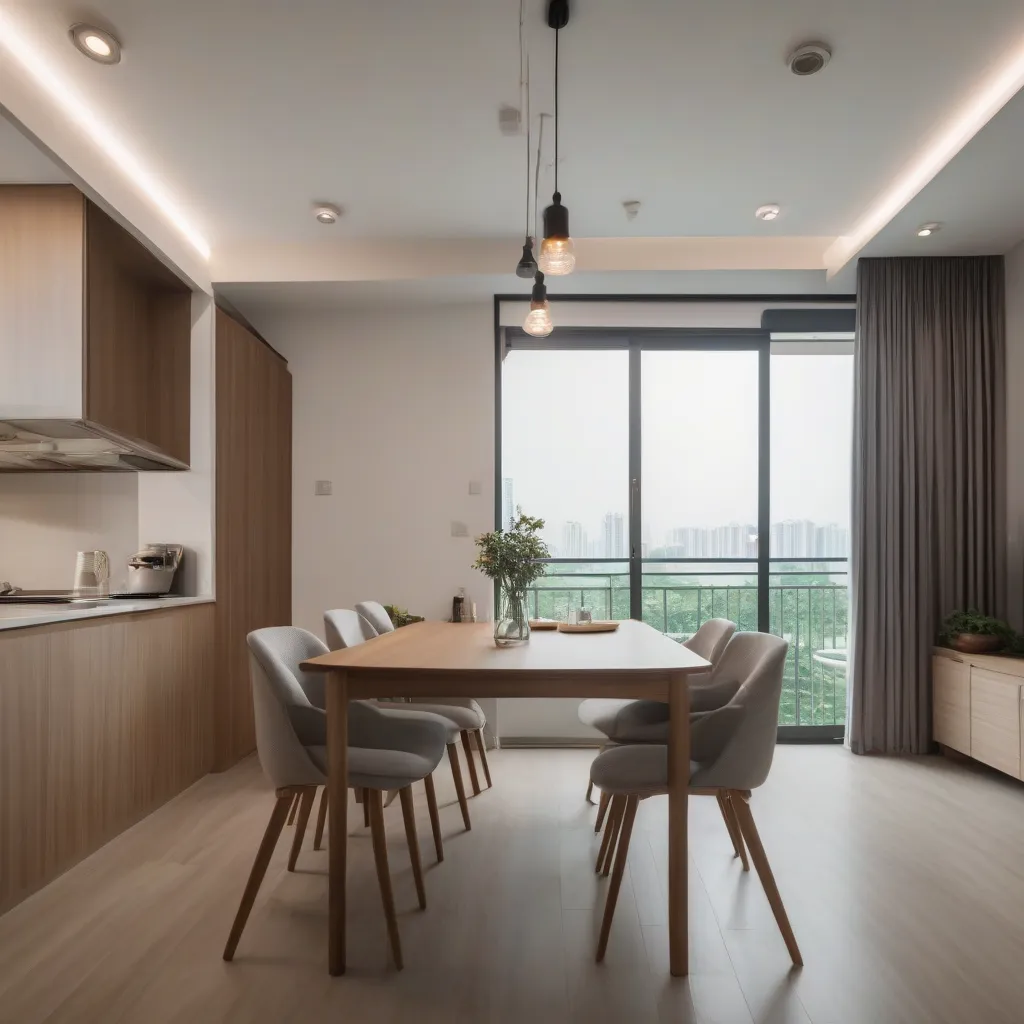
How Open-Concept Kitchens Changed the Way We Choose Dining Furniture
If your kitchen opens straight into the dining area, that table is on show all day, not just at mealtimes. Here's what actually changes about what you should buy.
7 April 2026 · 3 min read