
Sliding Door vs Swing Door Wardrobe: Space, Access and Style Compared
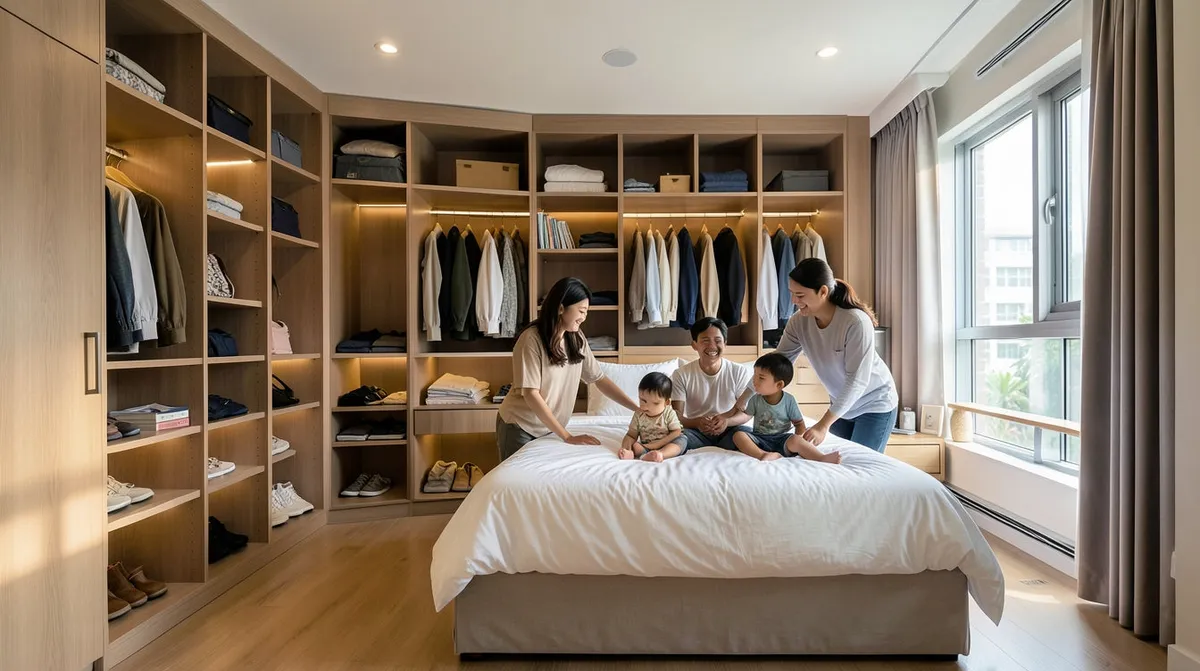
The Real Difference Comes Down to Clearance
Stand in the middle of most Singapore bedrooms with a tape measure and the decision practically makes itself for you: how much floor space actually sits between your bed frame, the wall, and the wardrobe you have your eye on. A hinged door that swings open beautifully in a showroom can knock straight into the corner of your bed frame at home, while a sliding door that looked a bit plain on the showroom floor might be the only thing that actually opens without you having to shuffle furniture around first. Before we even get into looks, it helps to separate the two wardrobe styles by what they cost you in space, how they affect your daily routine, and what they do for the room visually.
Space: What Each Door Style Actually Demands
A swing, or hinged, door wardrobe needs an open arc in front of it roughly equal to the width of one door panel, usually 400mm to 600mm, so it can swing fully open without hitting a bed, side table, or wall. In a compact BTO bedroom where the bed frame sits close to the wardrobe, this arc is often the real limiting factor, not the wardrobe's footprint itself.
A sliding door wardrobe needs almost no clearance in front, since the panels travel along a track running parallel to the wardrobe face. The trade-off is that sliding systems usually need a slightly deeper carcass to house the track and overlapping panels, and the wardrobe's overall footprint against the wall tends to be fixed, so it is harder to split into separate modules later on.
- Swing doors: need clearance on the floor in front, but the carcass itself can be shallower
- Sliding doors: need almost zero clearance in front, but the carcass usually runs deeper and the layout is less flexible
Access: How You Actually Reach Your Clothes
This is where the two styles really diverge in daily use. Swing doors, once open, show you the full width of the wardrobe interior all at once, handy if you like seeing your whole hanging rail or need to pull a suitcase out from the back. Sliding doors only ever expose one section at a time, since the panel you are moving runs in front of, or behind, the section next to it. Need something from two different compartments? You may end up sliding the door back and forth a couple of times.
For households with children or elderly family members, this matters more than it looks on paper. Sliding doors are lighter to operate and do not swing out into a walking path, which is gentler on small fingers and easier for anyone with limited mobility. Swing doors, while heavier, tend to feel more open and generous when you are getting dressed in the morning.
Style: The Look You Get With Each
Sliding wardrobes suit sleek, mirrored, or glass-panel finishes well, which can visually open up a small room by bouncing light around, something we see often in shoebox and 3-room BTO units. The overall look tends to read as flush and minimal, with no hardware on show.
Swing door wardrobes give you more freedom with panel detailing, framing profiles, and handle or knob hardware, which suits a warmer, more textured, furniture-piece look rather than a built-in one. If your bedroom leans toward a layered, cosier interior style, hinged doors will usually sit better in the room.
Living With Either in Singapore's Climate
Sliding tracks collect dust over time and do well with an occasional wipe-down and a light silicone spray on the rollers to keep the panels gliding smoothly, especially in humid months when timber and laminate can swell slightly. Swing door hinges are simpler mechanically and rarely need adjusting, though soft-close hinges are a small upgrade worth having if you want to avoid slamming in a household with young children.
Making the Call for Your Room
As a general rule, if your bedroom is on the tight side, if the wardrobe sits opposite a bed or walkway, or if you want a mirrored surface to open the room up visually, sliding doors are usually the more practical fit. If you have a bit more breathing room, want full-width access to your clothes, and would like the wardrobe to feel like a proper piece of furniture rather than a built-in box, swing doors are worth the extra clearance they ask for.
Either way, measure the wardrobe against your actual room, not just how it looks in the showroom. If you would like to walk through both options in person, the team at Nova Furnishing is happy to help you measure your space and talk through which door style will genuinely work for your bedroom. Drop by a showroom or reach out on WhatsApp whenever suits you.
Related Articles
Smart Storage Ideas for BTO Flats With Limited Built-In Closets
BTO flats rarely come with enough built-in storage. Here are practical, room-by-room ways to add real storage without cluttering a small flat.
30 March 2026
Built-In Wardrobe vs Freestanding Wardrobe: Pros, Cons and Cost
A side-by-side look at built-in and freestanding wardrobes, what they cost, and how to plan your bedroom layout so you pick the storage that actually suits your space.
23 March 2026
How to Choose a Wardrobe for a Small Singapore Bedroom Under 10 sqm
A close look at fitting a wardrobe into a genuinely small Singapore bedroom, covering bed frame choice, door styles, and internal layouts that actually save clearance space.
19 March 2026
How to Measure Your Bedroom for a Wardrobe: A Step-by-Step Guide
A step-by-step way to measure your Singapore bedroom for a wardrobe, from bedframe type to door choice, so the pieces actually fit the room.
16 March 2026